Collections management
A catalog worthy of the collection
Museum-grade records, kept current through a simple admin.
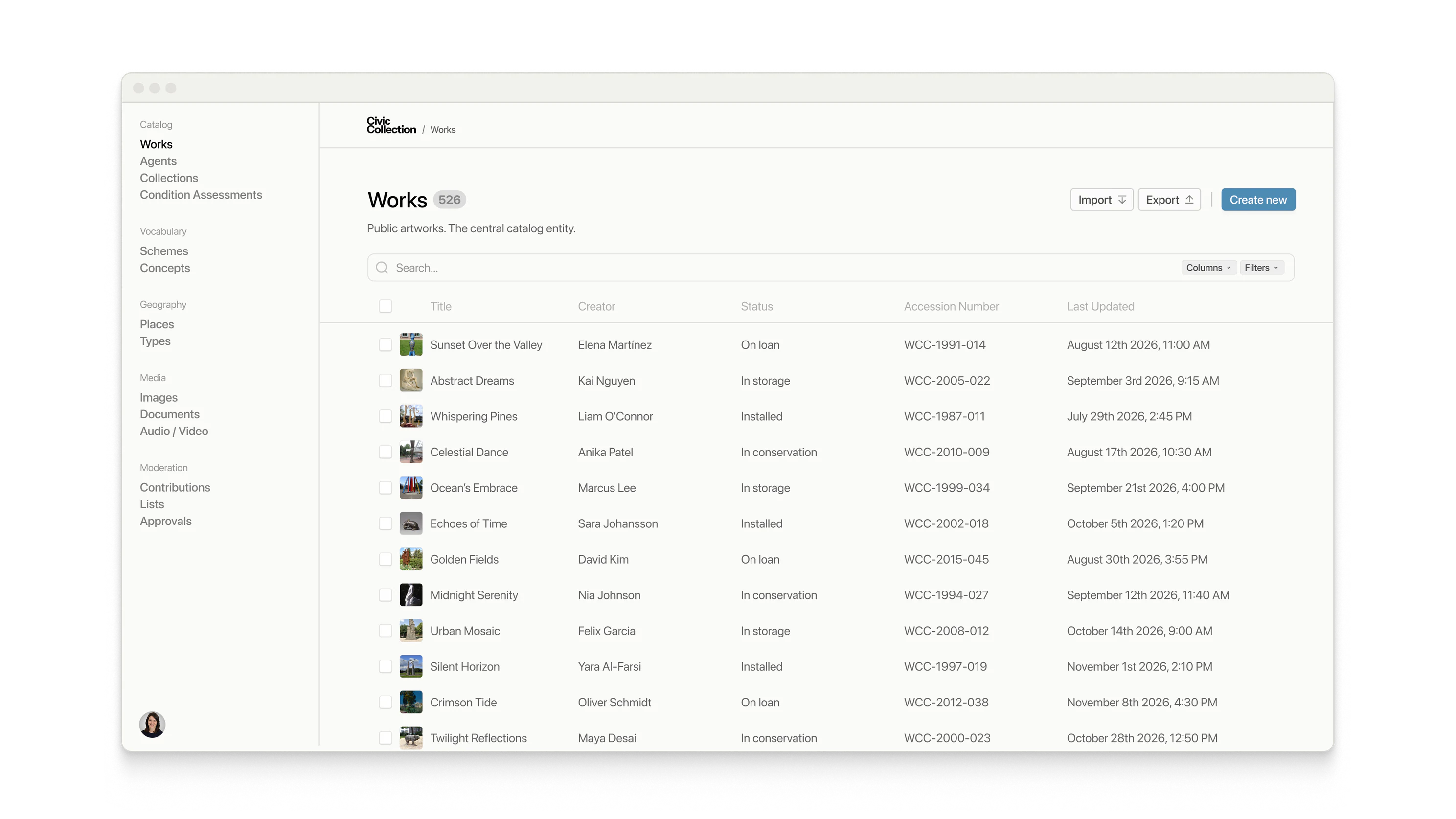
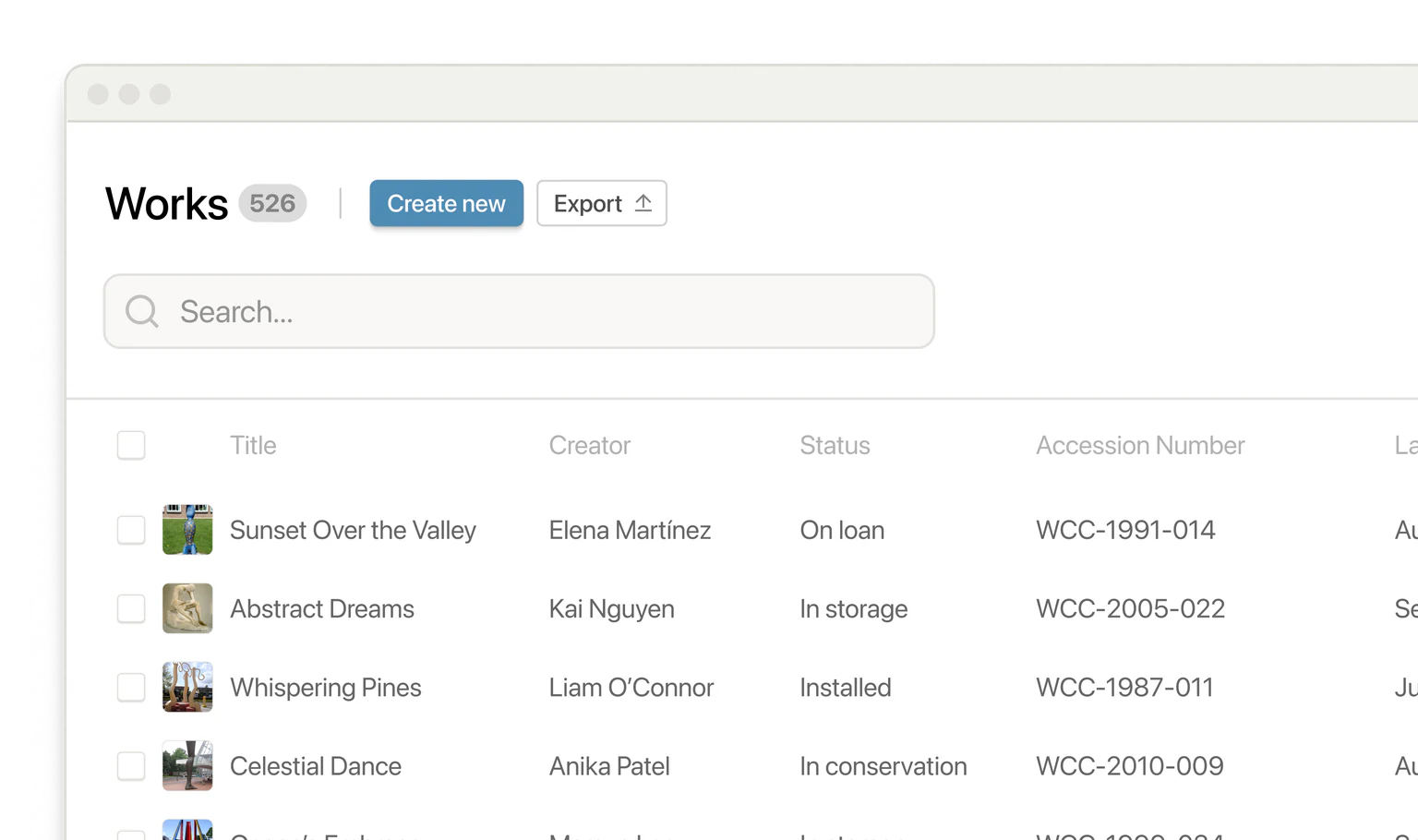
A real catalog, not another spreadsheet
Museum-grade records underneath, a simple admin on top.
-
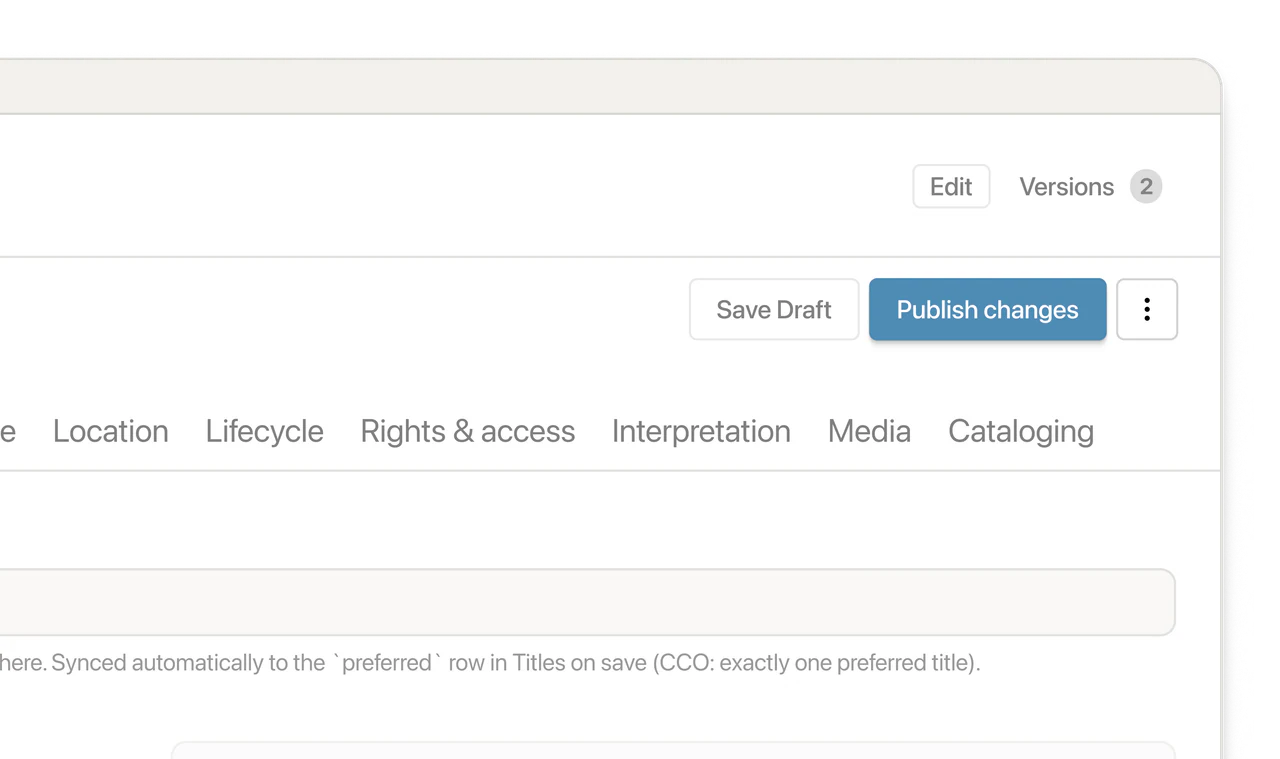
A simple admin
Your team publishes through it. Changes go live without a ticket.
-
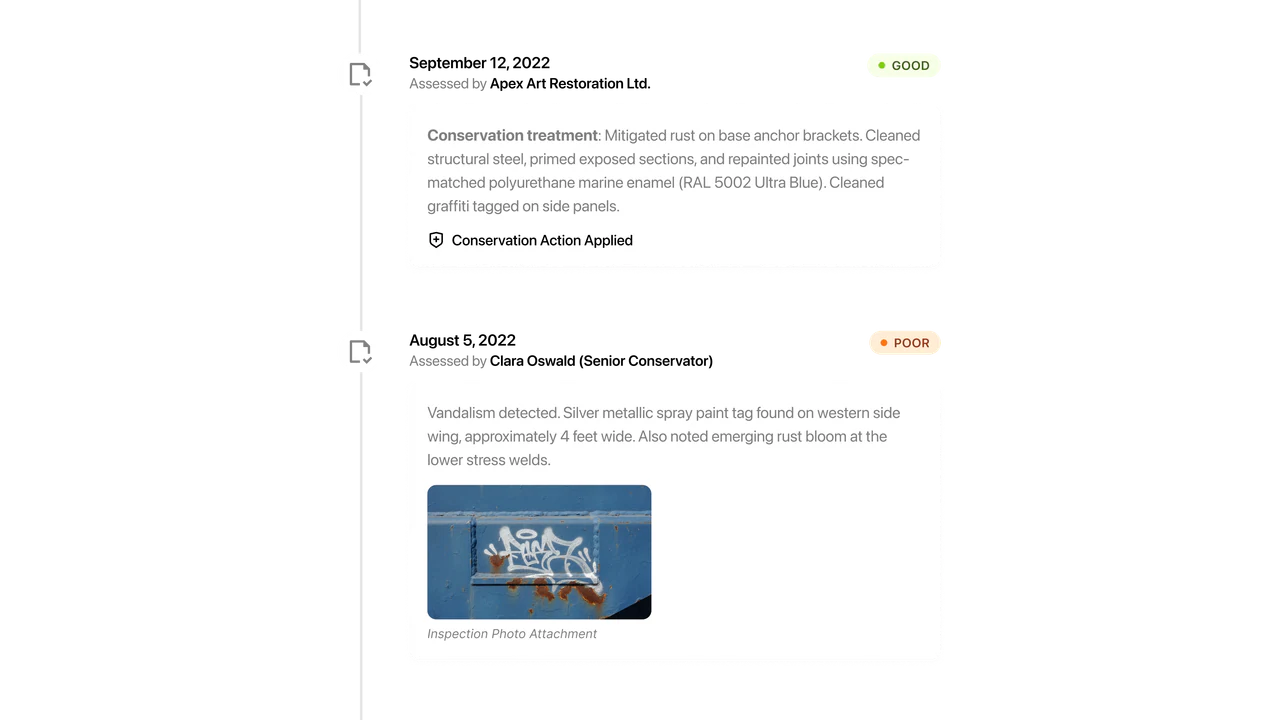
Condition assessments
Lifecycle timelines and assessments live with the work, not in a binder.
-
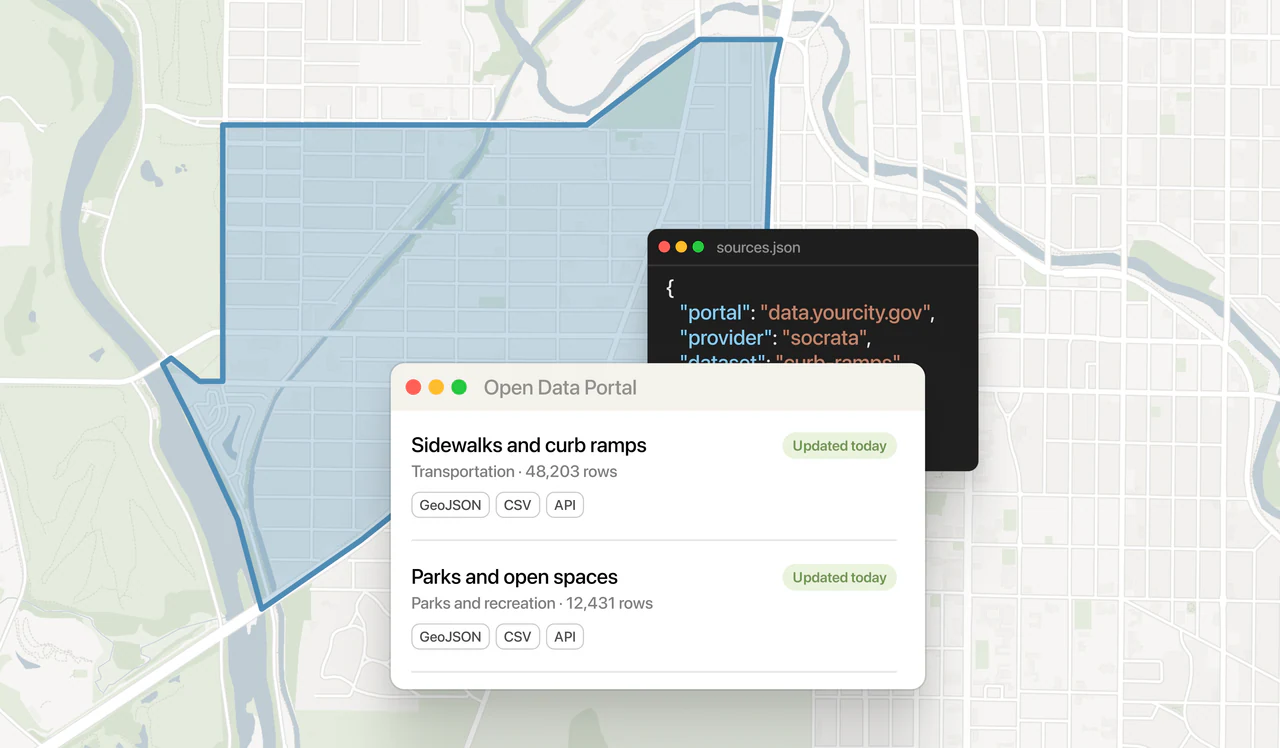
Open-data connected
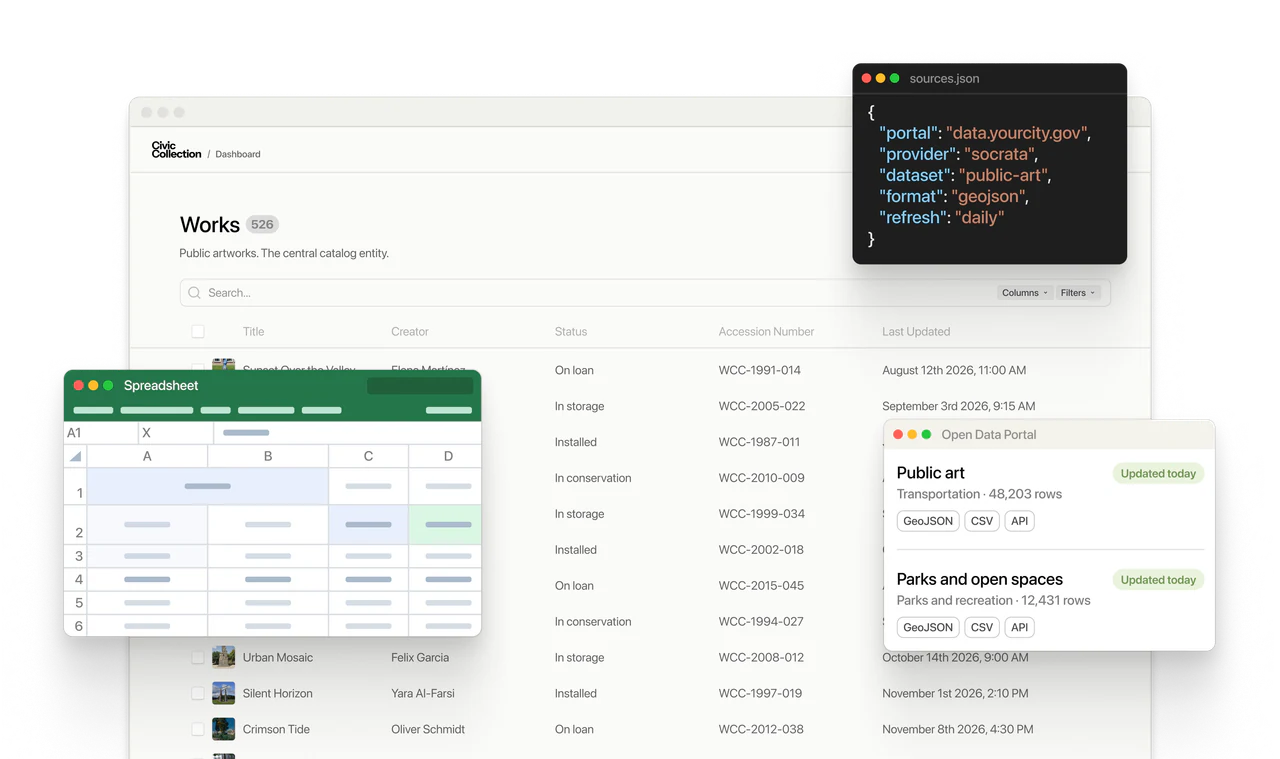
Reads your city's open data, so civic geography stays current on its own.
One record of truth for every work
Structured attribution, lifecycle timelines, and condition assessments: the record a registrar would expect, behind a public page a visitor would love.
Built to be trusted with a collection
Standards underneath, approvals in front, and the exit always open.
-
Museum-grade records
Controlled vocabularies and structured attribution, modeled on CDWA/CCO, SPECTRUM, and the Getty vocabularies.
-
Approved before it publishes
Community contributions land in a moderation queue. Nothing goes public without your team's sign-off.
-
Yours, in full
We don't hold your collection hostage. Export every record, any time.
Every record has a public life
The catalog your team keeps is the guide your city explores. Publish a record and it becomes the artwork's public page, with its photos, story, and pin on the map.
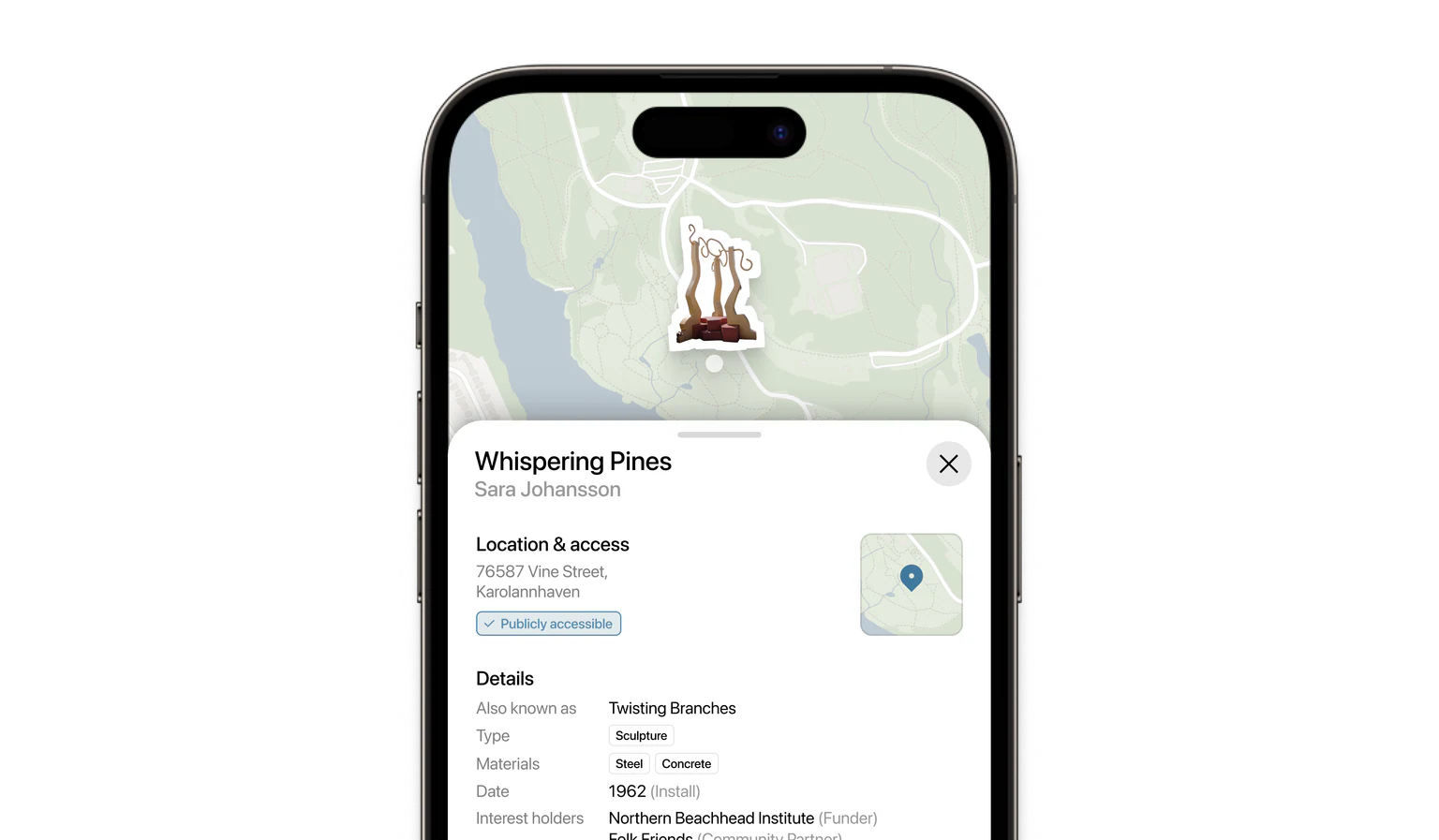
What museum-grade earns you
Structured records do quiet work everywhere the collection appears.
-
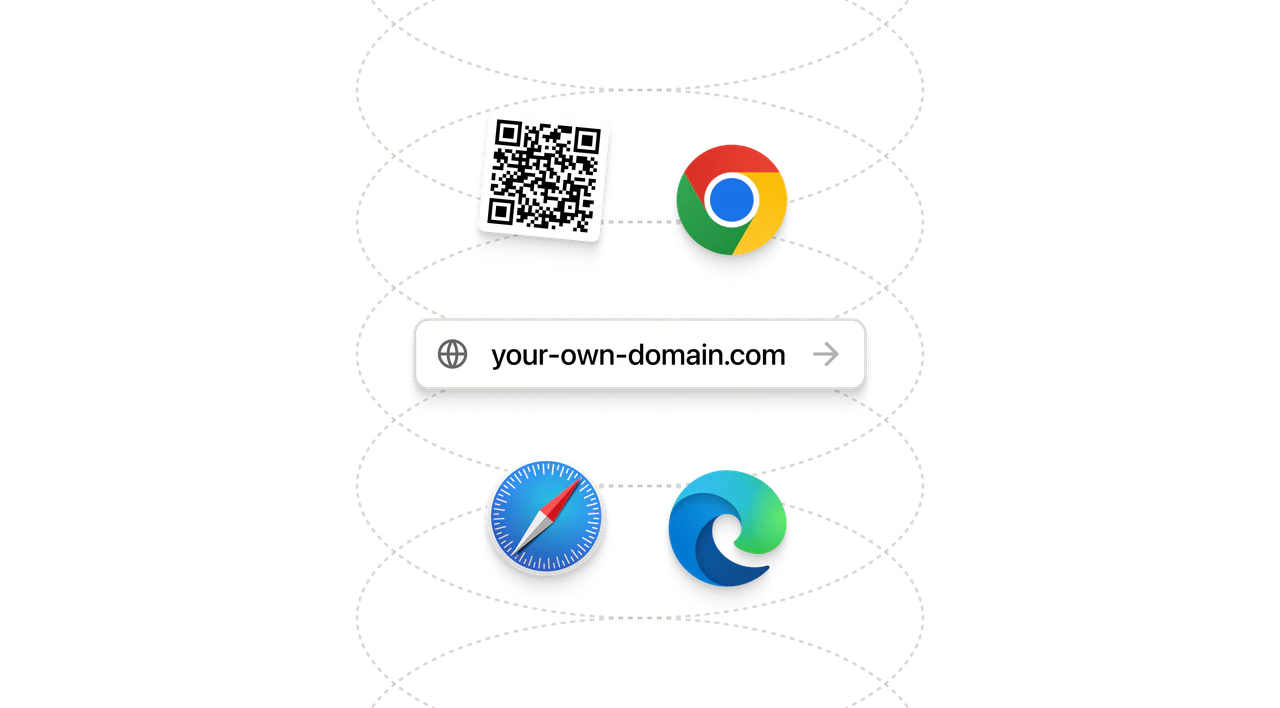
Cited by search and AI assistants
Every published record is a server-rendered page with structured data. Search engines and AI assistants can find and cite each work.
-
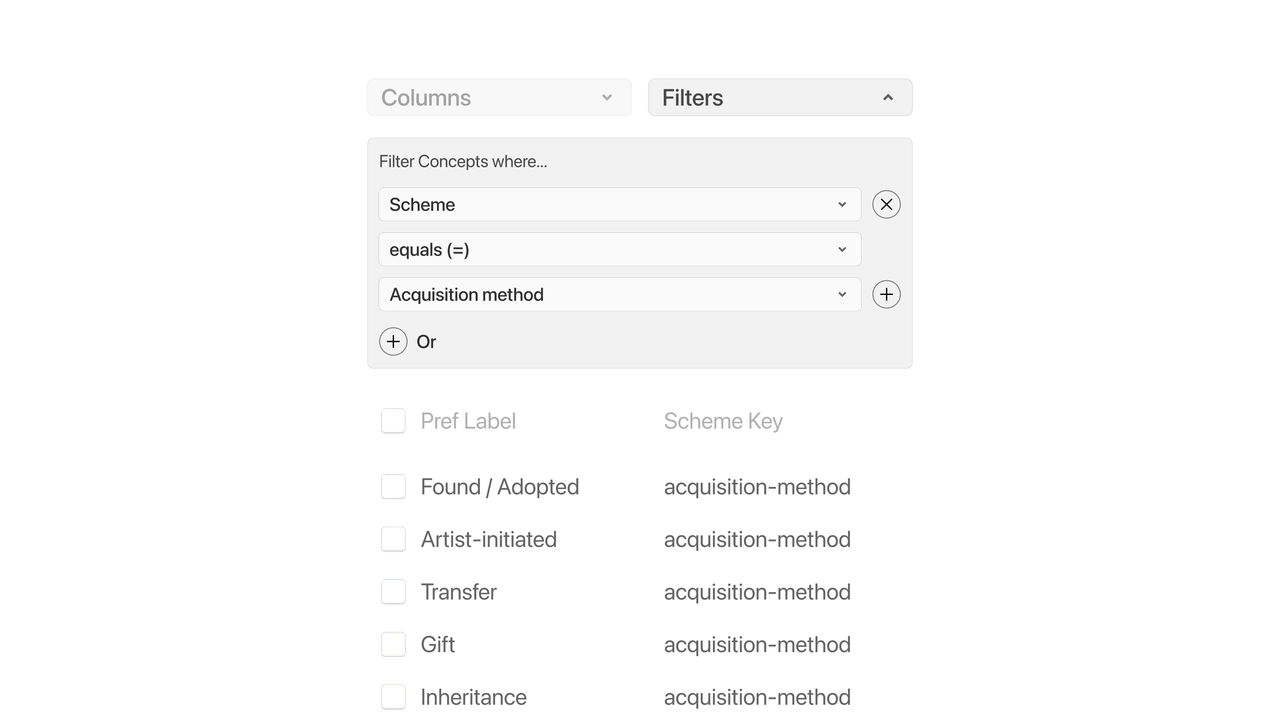
Filters that hold up
Controlled vocabularies keep artists, mediums, and neighborhoods consistent, so every filter in the guide returns the full picture.
-
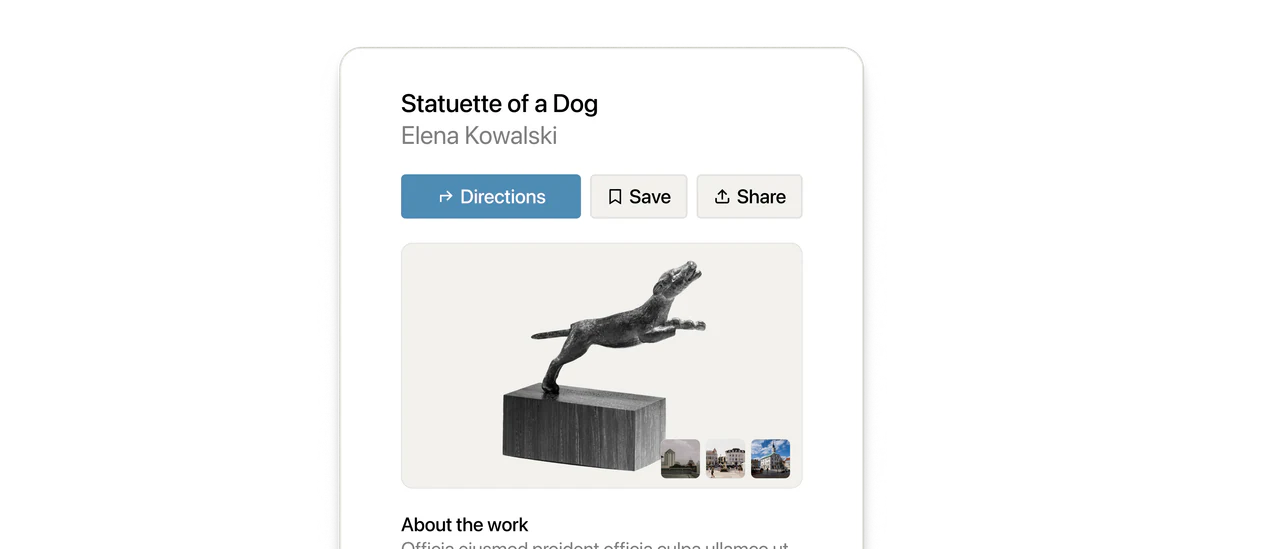
Artist credit that travels
Attribution is structured into the record, not typed into a caption. Every work names its maker wherever it appears.
Proven on a whole city's collection
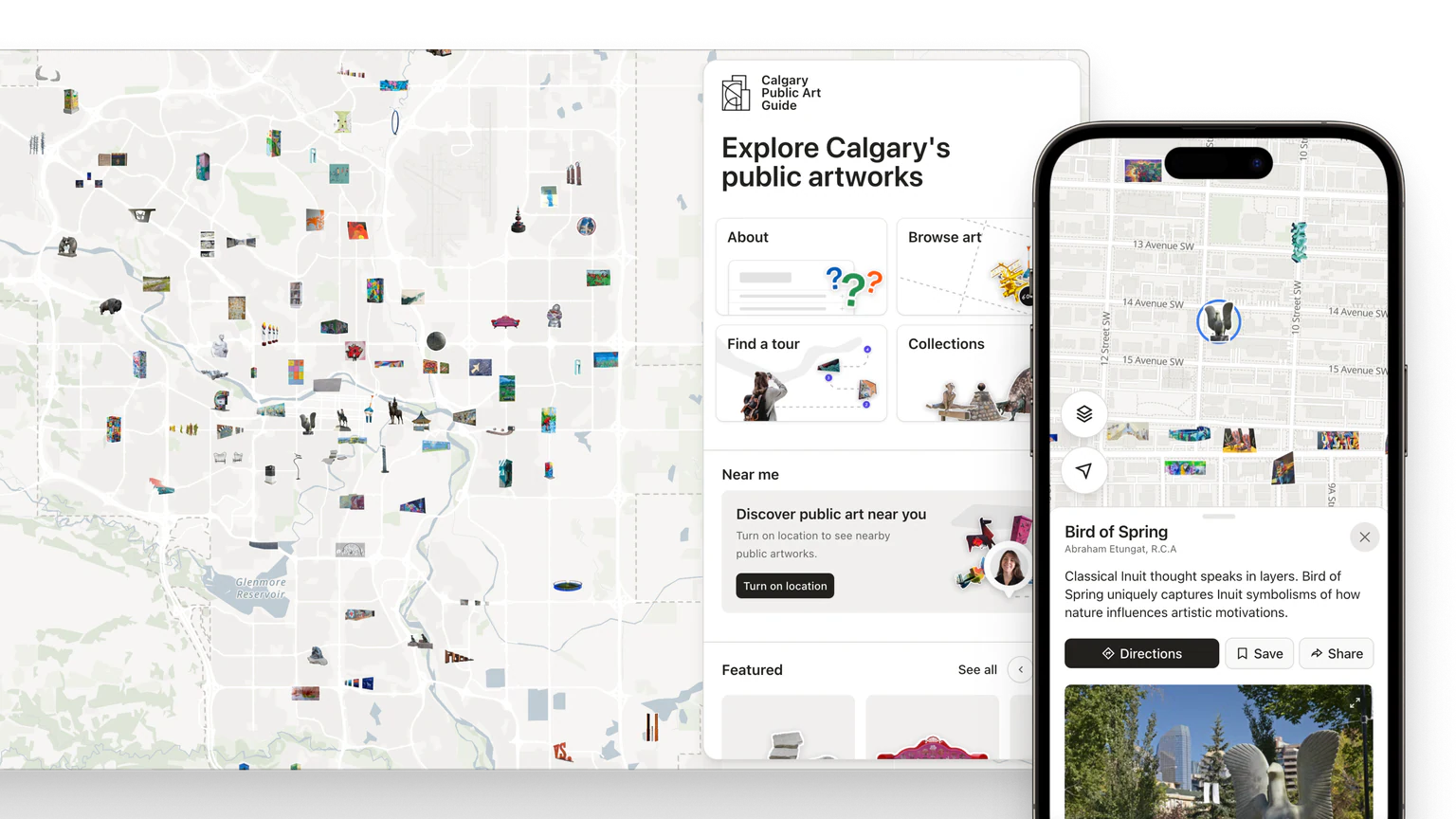
Calgary Arts Development runs the city's mixed collection on this catalog. It reads City of Calgary open data and covers artworks in every ward.

You publish, we operate
Onboarding is a scoped service, not a setup wizard.
-
Done-for-you migration
Wherever your collection is, that's where we start. Spreadsheets, PDFs, and open datasets become structured, standards-based records during onboarding.
-
Operated for years, not a season
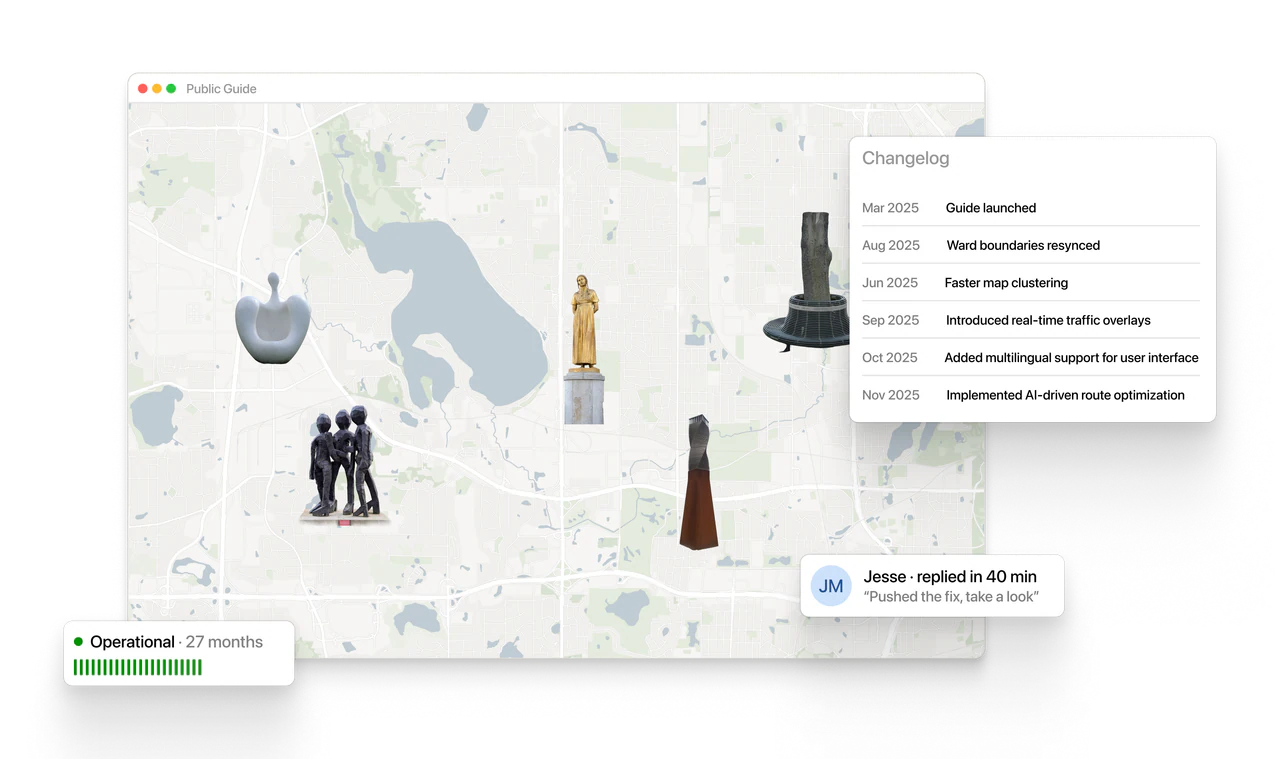
We host, maintain, and improve the guide after launch. Your team keeps publishing, and there are real people to call.
FAQs
We already have a spreadsheet and an open dataset. Is that wasted work?
No. It's a head start. The guide reads municipal open data instead of competing with it, and your records build on what you already have.
What standards do the records follow?
Records are modeled on museum documentation standards: CDWA/CCO, SPECTRUM, and the Getty vocabularies, with controlled vocabularies and structured attribution.
Can we export our catalog?
In full, at any time. Your catalog is yours. We don't hold your collection hostage.
Who keeps the records current?
Your team, through a simple admin. Publishing a change doesn't need a developer or a ticket.
Does it handle condition and lifecycle information?
Yes. Condition assessments and lifecycle timelines live with each work's record, not in a binder.